

Discover A Gothic Gem - Step Inside History: Unveiling the Marvels of Louisiana’s Old State Capitol | Ken Hulsey Photographer

A while back, I had the privilege of spending my lunch break at the historic Old State Capitol in downtown Baton Rouge. This gothic castle-style building once housed the legislators who deliberated on the affairs of the Pelican State, and it is now a first-rate museum dedicated to Louisiana's history.
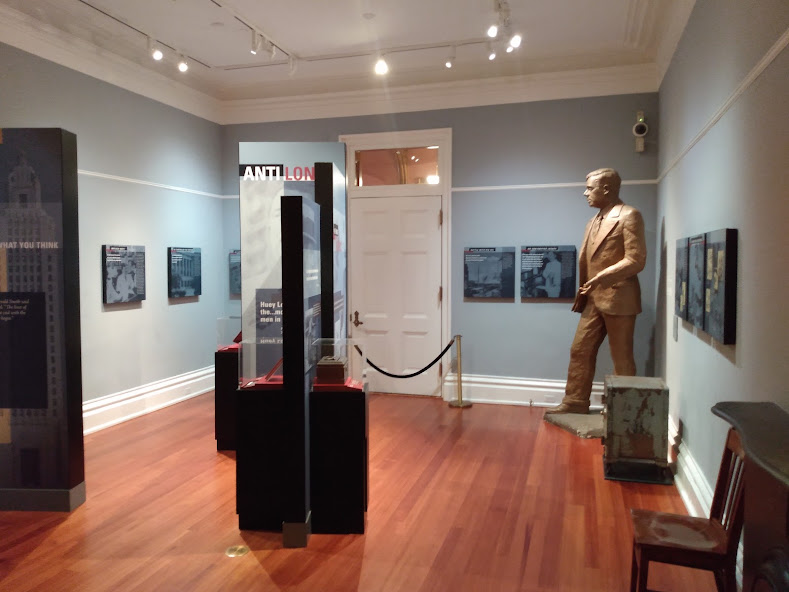
If you are impressed by the castle-like exterior, you will be amazed by what you find inside. The lower floor features exhibits that focus on the history of the Capitol building, the early days of Louisiana, and its most famous figure, the infamous Huey P. Long. A majestic circular staircase leads to the second floor, which includes an impressive ballroom, a spacious auditorium, and an elaborately decorated foyer with a stunning stained glass mosaic skylight overhead.
It truly has to be seen to be believed!
- Story and Photos by Ken Hulsey
From The Old State Capitol Website:
Louisiana's Old State Capitol, a Gothic architectural treasure, stands high on a bluff overlooking the Mississippi River. The 165-year-old statehouse has withstood war, fire, scandal, bitter debate, abandonment and an occasional fistfight. Today, the building stands as a testament to bold, inspired leadership and active citizenship.
In 1990, the Louisiana Legislature placed the former statehouse under the jurisdiction of the secretary of state and appropriated funds for a major restoration project. The building re-opened as the Center for Political and Governmental History in 1994. Now referred to as the Museum of Political History, the Old State Capitol has received awards for its architecture, exhibits and preservation.
The Old State Capitol has such an interesting history:
By the 1860s with a possible Civil War on the horizon, legislatures met in the House Chamber to discuss the state’s position on secession under Gov. Thomas Overton Moore. On January 26, 1861 the legislature voted to secede from the United State of America. The scene from inside the statehouse was described by the Weekly Gazette & Comet as “a shout as never before went up from the old Gothic Building.” Louisiana became The Sovereign and Independent Commonwealth of Louisiana for two months before joining the Confederate States of America. In 1862, the state government left the capitol and fled Baton Rouge in advance of Union troops. The capitol was moved to Opelousas and then to Shreveport. Union troops quickly took over the capitol building and used it as a command post, prison and garrison. Union troops occupying the building allowed a fire in the northwest turret to rage ultimately causing a catastrophic fire that gutted the building. The exterior walls were the only things that remained.
In 1866, with the Civil War now over, the state capitol was re-established in New Orleans and the building remained vacant.The state constitutional convention of 1879 stated that Baton Rouge was once again to become the seat of government in Louisiana. The legislature allocated $153,000 to repair the statehouse and appointed William A. Freret as architect. Freret’s vision of a fourth floor, cast iron spiral staircase, stained glass dome and exterior towers were approved and reconstruction of the building began. The newly reconstructed capitol building was complete in 1884. In the following years fiery debates and fist fights broke out throughout the building, namely over the first Louisiana Lottery. In 1906, a fire in the Senate chamber caused extensive damage to the east wall of the building and water damage throughout. The legislature provided funds for repairs. Part of those repairs included removing the iron turrets atop of the main towers.
Here are my photos:




Uncover the Story Behind Abandoned Locomotive #400 in Long Leaf, Louisiana | Ken Hulsey Photographer


Comments
Post a Comment